
Root canal treatment under a microscope
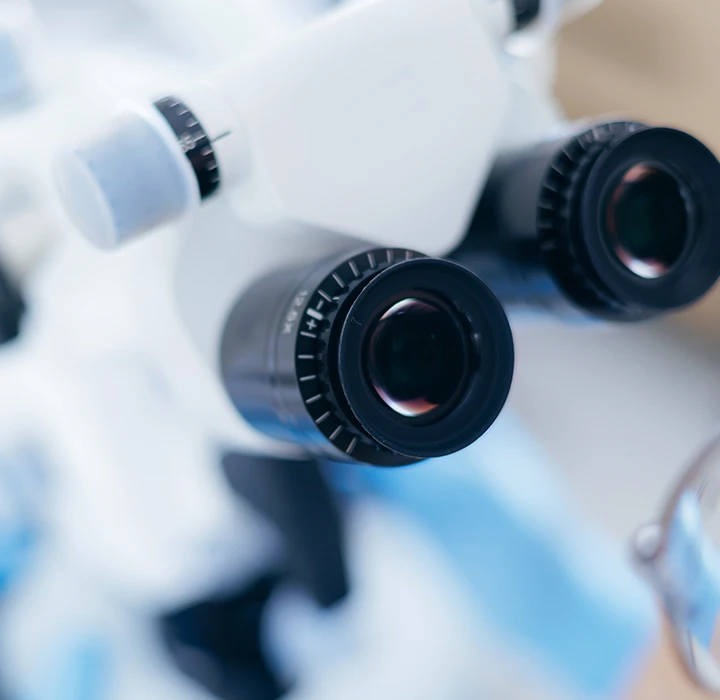
Primary root canal treatment and retreatment using a Leica microscope, which provides a clearer view of the complex internal structures of the tooth.

Root canal treatment, also known as endodontic treatment, is performed when the dental pulp is irreversibly damaged, inflamed, or infected. The goal of the treatment is to remove infected tissue from the root canal system, clean and disinfect the canals, and seal them tightly so that the tooth can be preserved for as long as possible.
At the “Diadenta” clinic, a modern Leica microscope is used for root canal treatment and retreatment. It magnifies the treatment area and provides better illumination, allowing the dentist to more accurately assess the complex anatomy of the tooth, locate additional canals, remove old materials, and address more complex clinical situations.
The microscope is also used in some cases to remove an instrument that is stuck or has broken off in a root canal, as well as to perform certain filling procedures.
Why is a microscope used during treatment?
The root canal system can be very intricate and anatomically complex. Some teeth may have additional canals, narrow branches, old filling materials, or other obstructions.
The Leica microscope provides magnification and better illumination. This is particularly useful:
- when searching for hard-to-see or additional canals;
- when assessing complex root canal anatomy;
- when retreating previously treated root canals;
- when removing old filling materials from the canals;
- when removing an instrument that has broken off inside a root canal;
- when evaluating cracks or other hard-to-see structures;
- when performing precise procedures inside the tooth.
A microscope does not in itself guarantee the success of treatment, but improved visibility and lighting help the dentist perform the procedure with greater precision.
Want to book a visit?
Fill in the short registration form – our administrators will contact you and arrange a convenient time.
Specialists providing this service
Frequently asked questions
The microscope magnifies the treatment field and provides better illumination. This helps the dentist see canal openings, complex anatomy, old materials and other fine structures more precisely.
Retreatment may be needed when an infection persists, the previous treatment was inadequate, some canals were left untreated, or another correctable problem has appeared.
In some cases, yes. It depends on where the instrument is, the anatomy of the canal and the risk to the tooth tissues. The decision is always made individually.
No. The type of final restoration depends on the position of the tooth, the chewing load and how much natural tissue remains. A filling may be enough for some teeth, while an onlay or a crown may be recommended for others.
Short-term sensitivity or tenderness when biting can be normal. However, pain that gets worse or lasts, or swelling that increases, should be assessed by the dentist.
If you catch a cold or another acute infectious disease, or if a cold sore appears, please let the clinic’s reception know. We will offer you another convenient appointment time. This helps us reduce the risk of spreading infections and protect our patients, those accompanying them, and our staff.
Did not find the answer to your question?
Send a request – we will get in touch and advise you.

Start your
journey towards a healthy
smile
Choose a visit time that suits you in our online booking system. During the consultation, we will assess your situation and help you choose the most suitable treatment path.